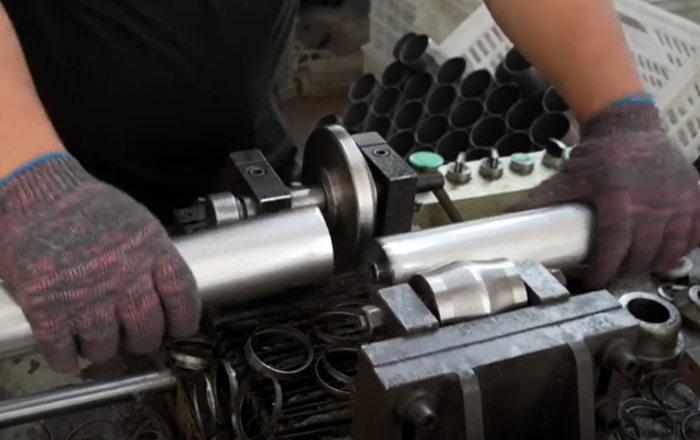
Choosing the right stainless steel grade is key for durable drinkware and food-contact products. Stainless Steel 201 and 304 are commonly used materials. They differ significantly in composition, corrosion resistance, toughness, and price. This article explains what 201 and 304 stainless steel are. It compares their differences. It highlights common daily use scenarios. It also guides you on selecting the best material for your needs. Finally, it shows how Steelermax helps global buyers with wholesale 304 stainless steel tumblers.
Table of Contents
What Is 201 Stainless Steel?
Stainless Steel 201 is an austenitic stainless steel grade. It was designed as a lower-cost alternative to 304. It contains roughly 15–17% chromium and 3.5–5.5% nickel. It also has higher manganese content. Reducing the nickel content makes the material more affordable. It still keeps acceptable stability and corrosion resistance for certain uses.
201 stainless steel is harder than 304. However, it is also slightly more brittle. It is commonly used for decorative items, indoor appliances, and budget-friendly drinkware. These uses are limited to environments with low exposure to harsh moisture or acids. Its high strength makes it good for certain structural parts indoors.
What Is 304 Stainless Steel?
Stainless Steel 304 is the most widely used stainless steel grade worldwide. It is often called “18/8 stainless steel.” This name comes from its basic composition. It contains 18% chromium and 8–10.5% nickel. This high nickel and chromium content makes it more corrosion-resistant than 201.
304 is fully recognized as food-grade. It is widely suitable for drinkware, kitchenware, medical tools, and many industrial applications. It offers excellent toughness, durability, and processing performance. 304 stainless steel remains bright and shiny over time. This makes it a top choice for high-quality tumblers and reusable bottles. It is valued for its long-term performance and safety.
201 vs 304: Key Differences
- Chemical Composition: 304 has more chromium and nickel. This gives it better corrosion resistance. 201 has more manganese and carbon. This makes it harder but slightly more brittle.
- Corrosion Resistance: 304 withstands humid, coastal, and acidic environments much better than 201. The higher nickel content protects it from pitting corrosion.
- Strength & Toughness: 201 is generally harder and has a higher yield strength. However, 304 is tougher, more ductile, and less prone to scratches or brittleness when formed.
- Weldability and Fabrication: 304 is easier to weld and form into complex shapes. 201 can be fabricated but might require more controlled conditions.
- Surface Appearance: 201 appears slightly darker due to the higher manganese content. 304 is brighter and has a more visually premium finish.
- Price: 201 is more cost-effective due to its lower nickel content. 304 costs more but provides superior long-term performance and reliability.
Corrosion Resistance Explained
The major difference between the two steels is how they react to corrosion. 304 is superior because of its nickel level. The nickel helps create a more stable passive layer on the metal’s surface. This layer shields the metal from rust and chemical attacks.
201 stainless steel is more prone to ‘pitting’ corrosion. This happens when the passive layer is damaged by chlorides, like salt or certain acids. This means 201 tumblers are not recommended for salt-heavy drinks or use near the sea. If the 201 material is used in humid or coastal areas, signs of rust may appear over time. For maximum product longevity, especially for drinkware, 304 provides better protection against daily wear and tear from various liquids.
Common Daily Use Scenarios
201 Stainless Steel: Best for indoor items, decorative appliances, and budget drinkware with limited exposure to moisture or acids. It is a good choice for items that are used briefly and cleaned right away.
304 Stainless Steel: Highly recommended for food-grade drinkware, outdoor tumblers, coastal and marine environments, and any products requiring long-term durability and safety. This is the standard choice for professional kitchens and reusable vacuum flasks.
Choosing Stainless Steel Based on Usage
Consider the following key questions when selecting a stainless steel grade:
- Will the product contact acids, salt, or moisture frequently? (Choose 304)
- Is certified food-grade safety required for the application? (Choose 304)
- What is the expected long-term durability and lifespan? (Choose 304)
- Is the budget extremely tight, and will the item be used only indoors? (201 may be suitable)
For drinkware and tumblers, 304 stainless steel usually provides the best balance between performance, safety, and cost. It is the industry standard. 201 may be suitable for budget or decorative items, but 304 ensures better corrosion resistance and long-term durability. Brands should select 304 to maintain high customer satisfaction.
Wholesale 304 Stainless Steel Tumblers – Contact Steelermax
Steelermax is a leading manufacturer of stainless steel drinkware in Zhejiang, China. We are located in the region known as the “Capital of Vacuum Flasks.” We produce high-quality 201, 304, and 316 stainless steel tumblers. We offer full OEM/ODM customization services. Our products meet strict international food-contact standards. They are perfect for global wholesale buyers seeking quality and reliability.
We provide custom sizes, shapes, colors, logos, lid types, and packaging. We handle bulk production efficiently. Whether you need 304 tumblers for brand promotion, corporate gifts, or retail stock, Steelermax offers factory-direct pricing and high-quality standards. Our production capacity is flexible to meet large orders. Explore our catalog today: Steelermax wholesale tumblers.
Conclusion
Both 201 and 304 stainless steel have their own advantages. 201 is more cost-effective. It is suitable for decorative or indoor items. 304 offers superior corrosion resistance, durability, and food-grade safety. For all drinkware applications, 304 is generally the recommended choice for best performance.
Understanding the core differences between stainless steel grades helps brands and importers make better sourcing decisions. Steelermax provides reliable solutions for bulk 304 stainless steel tumblers. We ensure stable quality and flexible customization options for your business.